
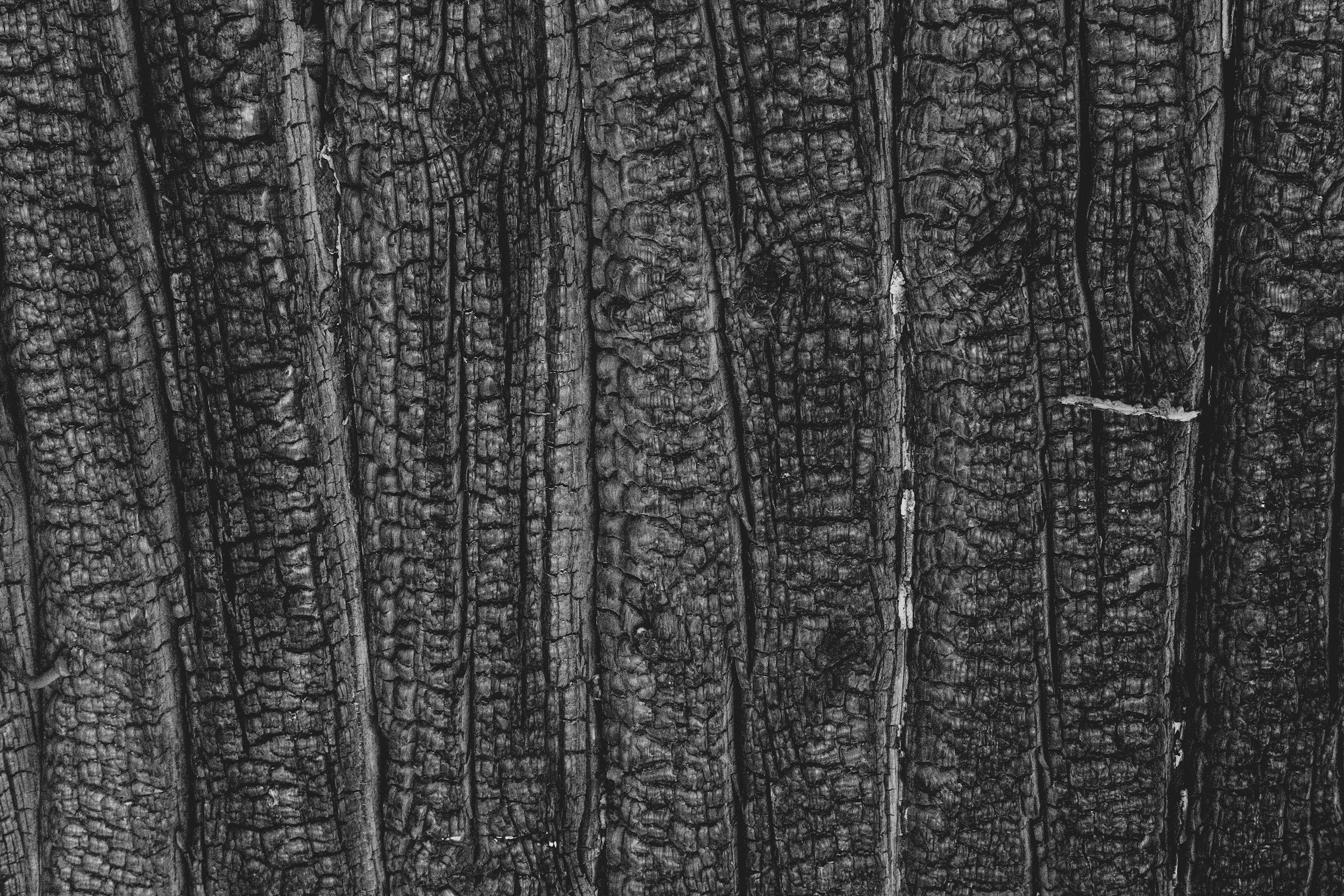
“What is Biochar?”
Biochar can help soils retain water and nutrients, provide habitat for soil microorganisms and improve the environment around plant roots.
A big part of this comes down to one remarkable feature: biochar is incredibly porous.
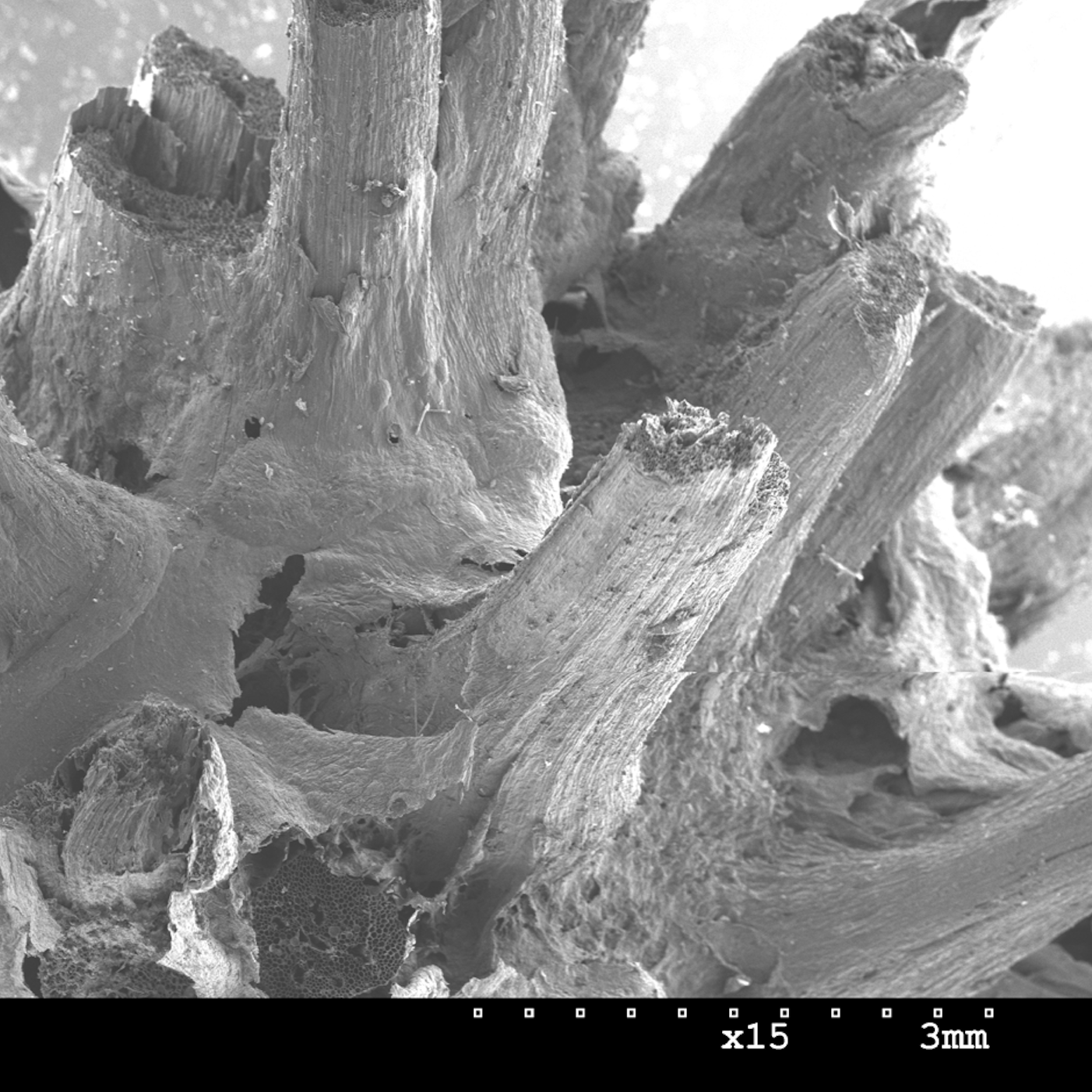
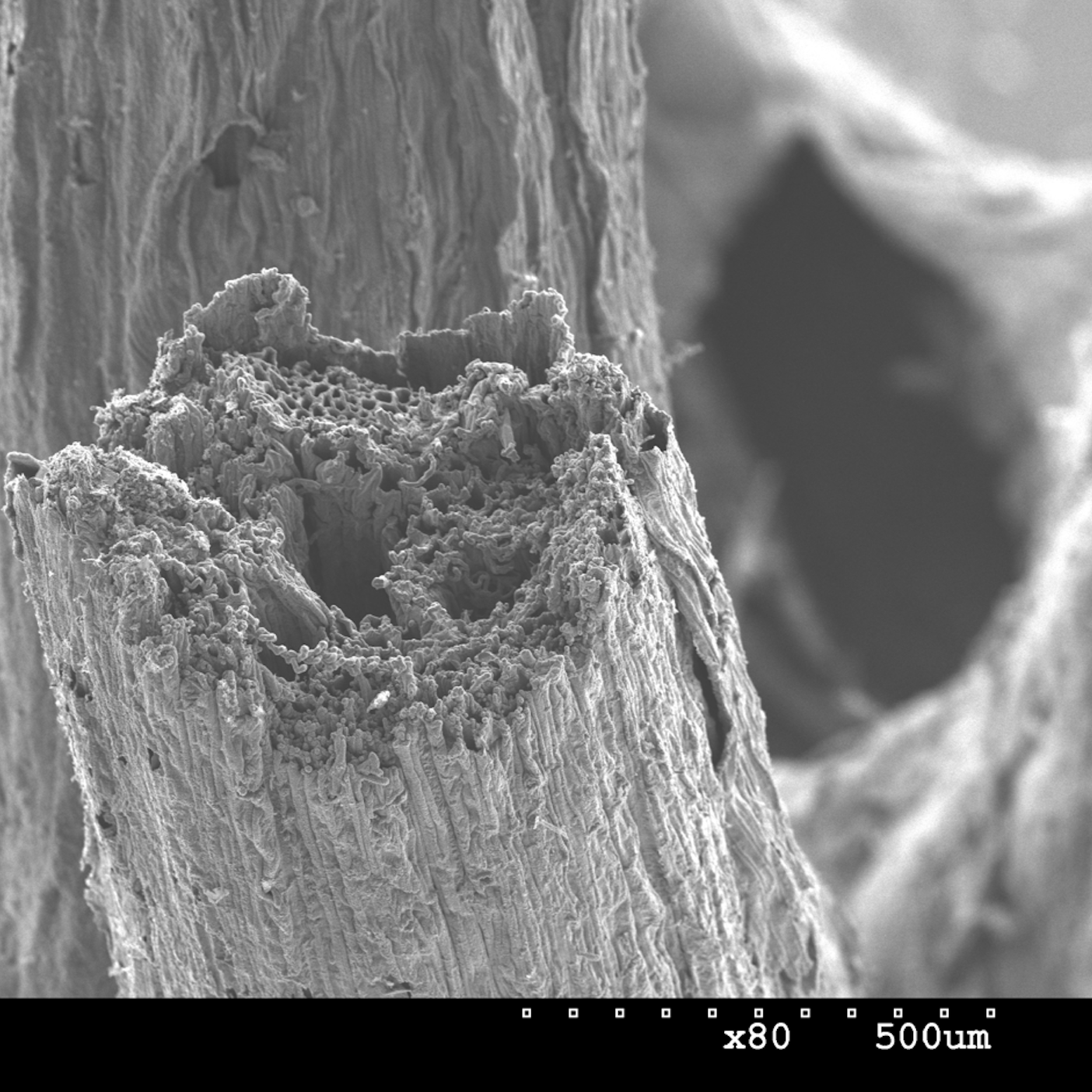
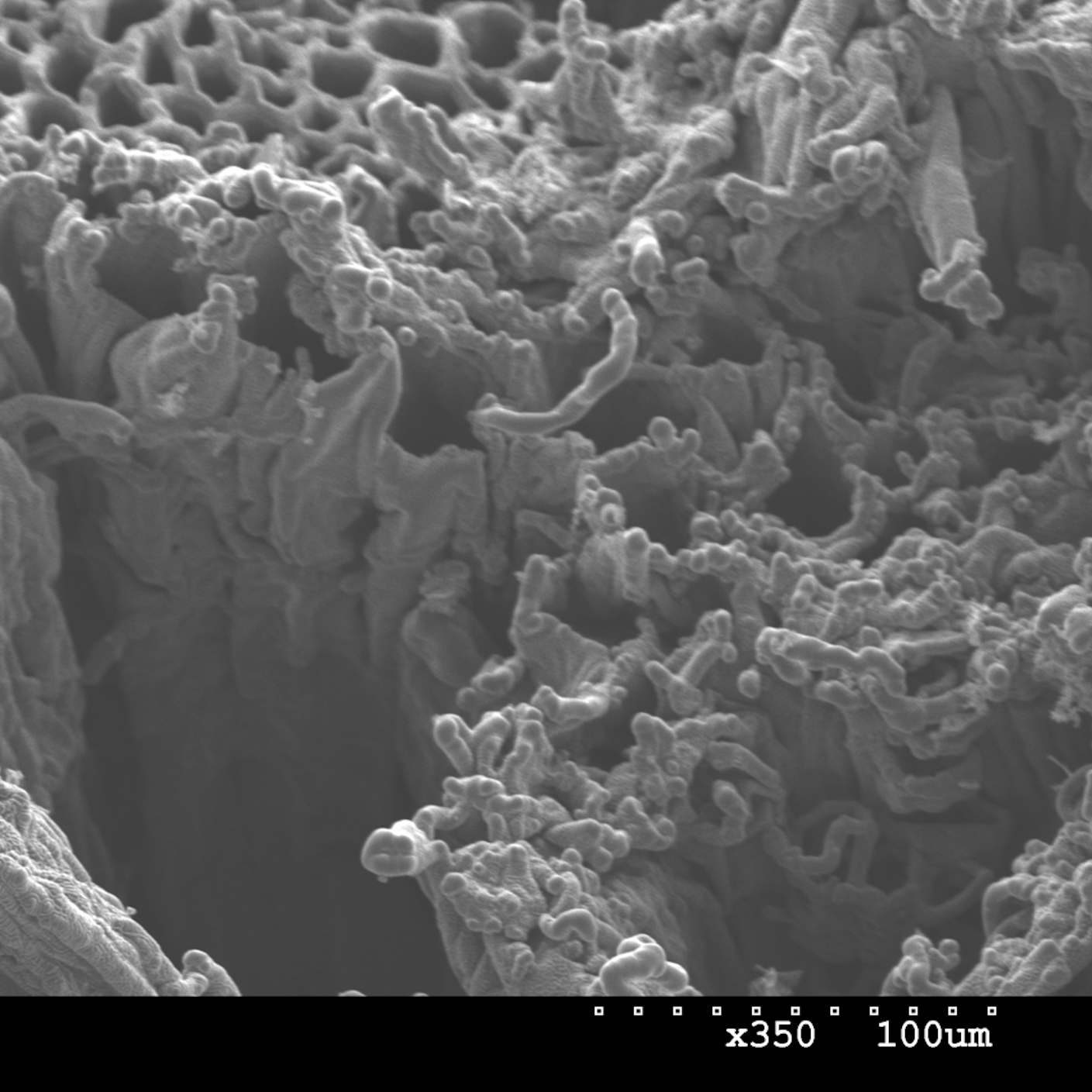
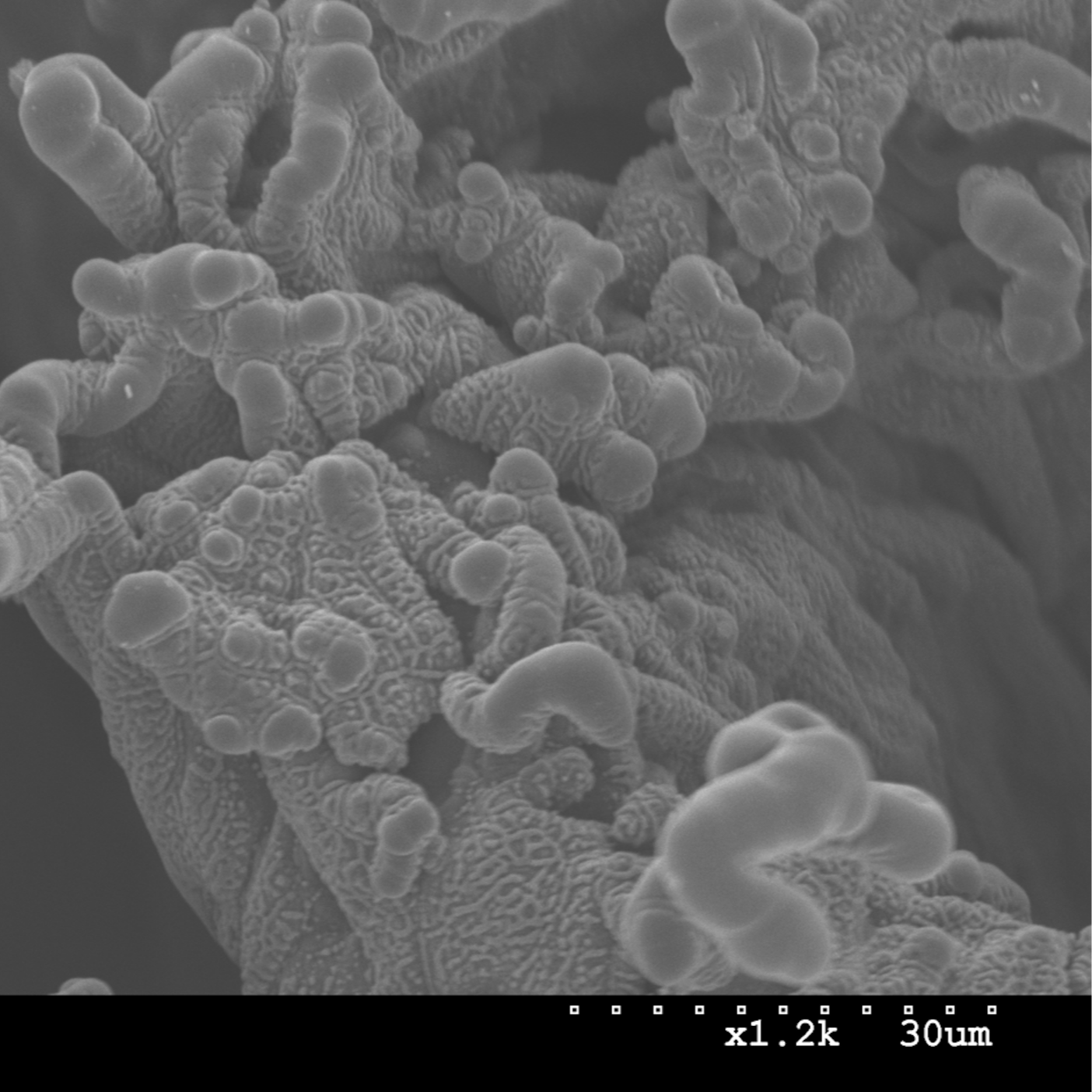
Under a microscope, biochar reveals itself not to be a solid lump, but to be more like a tiny network of tunnels, channels and cavities. When plant material is heated in a low-oxygen environment, as we do with our Kon Tiki kilns, much of its original structure is transformed into a carbon-rich material that retains this intricate pore network. These pores create a huge internal surface area, giving biochar far more surface to interact with the surrounding soil than its size might suggest.
Those tiny spaces can hold water and dissolved nutrients, helping to keep them available in the soil rather than allowing them to drain away too quickly. The pores can also provide sheltered spaces where beneficial microorganisms can live, creating a kind of microscopic habitat within the soil. In this way, biochar doesn't simply sit in the soil — its structure can actively change the environment around it.
And while it's doing all of that, it can also keep carbon captured by plants stored in a stable form for a very long time.
A simple material with a surprisingly powerful role in soil, growing and carbon storage.
Biochar is pure carbon, made by heating plant material in a low-oxygen environment.
At first glance, it looks just like barbecue charcoal. However, biochar is made to be pure, without the same impurities as barbecue charcoal (such as tar), so that it can be used for a different purpose: rather than being burned as a fuel, it is used as a long-lasting material in soils, growing systems and, increasingly, other applications where its unusual porous structure and stable carbon can be useful.
That's what makes biochar so interesting.
It brings together two things that really matter: healthier, more resilient soils and long-term carbon storage.
We zoomed in on our microscope to see our biochar up to 1.2k times magnified. It’s the colossal surface area of biochar that is its hidden superpower.
Take a closer look at the porous structure of biochar…
Other FAQs
-
Plants naturally absorb carbon dioxide from the atmosphere as they grow.
Through photosynthesis, they use that carbon to build stems, branches, roots and leaves. In a tree, a considerable amount of it becomes locked into the wood.
Normally, when that wood eventually decomposes or is burned, much of its carbon returns to the atmosphere.
Biochar offers another pathway.
Woody material and other suitable biomass can be heated at high temperatures with a restricted supply of oxygen in a process known as pyrolysis.
Because there isn't enough oxygen for the material simply to burn away, much of its structure is transformed instead.
Gases and volatile compounds are released, while a proportion of the carbon remains behind as a highly carbon-rich solid:
biochar.
The process changes not only the stability of the carbon, but also the physical structure of the material.
And that's where things get particularly interesting for soil.
-
Pick up a piece of biochar and it may not look particularly remarkable.
Look at it under magnification, however, and it's a different story.
The original cellular structure of the wood helps leave behind an intricate network of pores.
Those pores give biochar a very large internal and external surface area.
You can think of it a little like a microscopic carbon sponge — although the way biochar interacts with water and nutrients is more complicated than a conventional sponge simply soaking things up.
Once biochar is introduced into soil, those surfaces can interact with:
water, nutrients, organic compounds, plant roots and microorganisms.
Rather than simply feeding a plant and disappearing, biochar becomes part of the physical and chemical environment of the soil.
-
Biochar isn't a miracle cure and it isn't a replacement for good soil management.
But used appropriately, it can contribute to several important soil functions.
Helps Hold Water
Biochar's pore structure can influence the water-holding properties of soil and growing media.
The precise effect depends upon the biochar, soil type and amount used, but this can be particularly useful in lighter and more free-draining soils.
Biochar doesn't remove the need to water plants.
Instead, think of it as one tool for helping to create more resilient soil that can make better use of the water it receives.
Helps Retain Nutrients
Biochar is not the same thing as fertiliser.
Instead, its surfaces can interact with nutrients already present within the soil.
As biochar ages, changes to its surface chemistry can increase its capacity to retain and exchange certain nutrient ions.
This is one reason biochar and compost can work particularly well together.
A useful shorthand is:
Compost feeds the soil. Biochar helps it hold on to what it has.
The science is more complicated, but the distinction is important.
We don't see biochar as a replacement for compost.
We see the two as complementary.
Creates Habitat for Soil Life
Those tiny pores also create an enormous amount of surface area within the soil.
They can provide protected microhabitats in which microorganisms can colonise and interact with nutrients, moisture and plant roots.
Biochar doesn't magically introduce beneficial microorganisms into your soil.
Instead, it can become part of the habitat within which a healthy soil ecosystem develops.
-
Biochar is a form of charcoal. Charcoal is the outcome of heating biomass under restricted oxygen.
The important difference is what they are produced for and what may have been added to them.
Barbecue charcoal is manufactured as a fuel. Some charcoal products may contain accelerants, binders or other additives and should not simply be assumed to be suitable for soil.
Biochar is produced for beneficial use rather than combustion.
If you're putting something into the soil where you're growing vegetables, flowers, fruit or trees, it makes sense to know exactly what it is and where it came from.
That's one reason provenance is so important to us.
-
What Does "Charging" Biochar Mean?
If you've been reading about biochar, you've probably encountered the phrase charging your biochar.
It sounds technical, but the basic idea is simple.
Fresh biochar contains an enormous network of pores and surfaces.
Before putting it around plants, we recommend thoroughly wetting it and allowing it to interact with nutrient-rich or biologically active material.
This is known as charging or conditioning the biochar.
You can do this using materials such as compost, suitable liquid feeds or other appropriate nutrient-rich materials.
Biochar can also be incorporated into compost while the compost itself is being made.
The aim is to introduce moisture, nutrients and organic compounds to the biochar before it enters the root zone.
We recommend that Sweethill Biochar is always wetted and charged before use.
Don't use it dry.
-
How Do You Use Biochar?
One of the advantages of biochar is that there are several ways to incorporate it into a growing system.
It can be:
mixed with compost before spreading
incorporated into soil when preparing new beds
added to potting and container mixes
mixed into raised beds
applied with compost to no-dig beds
added around the rootball when planting
used when establishing trees and shrubs
incorporated during lawn preparation
added to compost while it is being made.
You don't necessarily need to treat an entire garden.
If you're planting an individual vegetable, perennial, shrub or tree, charged biochar can be applied directly around the planting position, putting it where developing roots can begin interacting with it.
For larger areas, it generally makes more sense to distribute it more evenly.
The appropriate quantity and application method will depend on what you're growing and where you're using it.
-
Does Biochar Need to Be Dug In?
No.
Biochar can work very well within no-dig growing systems.
Charge the biochar, mix it with your compost and apply the mixture to the surface of the bed as you normally would.
Roots, worms, soil organisms, water movement and normal biological processes can gradually integrate the biochar into the soil.
Alternatively, small quantities of charged biochar can be introduced locally whenever you're making a planting hole.
This means biochar can become part of a gradual approach to improving soil without repeatedly cultivating it.
-
How Long Does Biochar Last?
This is one of the characteristics that makes biochar so unusual.
Compost and other organic materials are continually decomposed by soil organisms. That's an essential part of nutrient cycling, but it means their carbon doesn't remain unchanged indefinitely.
Biochar is different.
Pyrolysis transforms part of the biomass carbon into highly stable aromatic carbon structures that are much more resistant to biological decomposition.
As a result, a substantial proportion of biochar carbon can persist for centuries and potentially considerably longer, although persistence varies with the biochar and environmental conditions.
So when you add biochar to soil, you aren't necessarily adding something that needs replacing every growing season.
You're adding a relatively persistent material to the soil system.
-
Biochar isn't only interesting because of what it can do in soil.
It's also interesting because of what it can do with carbon.
A tree grows.
It absorbs carbon dioxide from the atmosphere.
Some of that carbon becomes wood.
If the wood eventually decomposes or is completely burned, much of that carbon returns to the atmosphere.
But if suitable biomass is converted into biochar, a proportion of that carbon can be stabilised.
Put the resulting biochar into soil and much of that carbon can remain there for a very long time.
In simple terms:
Plants capture the carbon. Pyrolysis stabilises some of it. Biochar stores it.
This is why biochar is increasingly discussed as a form of carbon dioxide removal when it is produced responsibly and the full system delivers a genuine net climate benefit.
It isn't simply about emitting less carbon.
It's about taking carbon that originated in atmospheric CO₂ and putting some of it into a much more persistent form.
One Application, Long-Term Potential
This also changes the way we think about biochar as a gardening or horticultural product.
Many things we add to our gardens are consumed, washed away or broken down relatively quickly.
Biochar isn't intended to work like that.
Once an appropriate amount has been incorporated into the soil, much of it remains.
You can continue adding compost.
You can continue mulching.
You can continue feeding plants where necessary.
You can grow and harvest crops year after year.
But the biochar you've already incorporated can remain part of the soil beneath them.
That's why we prefer to think of biochar not simply as another plant product, but as:
long-term infrastructure for living soil.
-
Biochar has potential across an enormous range of growing situations.
At home, that includes vegetable gardens, allotments, no-dig beds, flower borders, pots, hanging baskets, houseplants, lawns, trees and shrubs.
Professionally, biochar is being explored and used across horticulture, propagation, market gardening, landscaping, tree planting, agriculture and growing-media production.
Research is also exploring uses beyond conventional soil applications, including soilless growing systems and construction materials.
The underlying material is simple.
But the ways we can use its porosity, persistence and stable carbon are remarkably diverse.
-
This is important.
"Biochar" describes a category of materials rather than one completely uniform product.
Its characteristics can vary according to:
the original feedstock,
how it was produced,
pyrolysis conditions,
particle size,
ash and mineral content,
and how it has been processed afterwards.
So if you're buying biochar, it's worth asking:
What was it made from?
Where did that material come from?
Who made it?
Can its provenance be traced?
And that's where our biochar is a little different.
What Makes Sweethill Biochar Different?
Your biochar, from our woods
We're a small family business making biochar ourselves in Devon.
We don't simply purchase anonymous biochar from elsewhere and put it into our own bags.
Our story begins in the woodland where we work.
Much of our site is ancient woodland that was historically planted with commercial conifers.
We're now gradually removing those plantation trees as part of a long-term project to restore a more diverse native woodland ecosystem.
Some of that timber becomes our biochar.
So when you buy Sweethill Biochar, there's an unusually short and transparent story behind what's in the bag.
We know where the trees grew.
We know why they were felled.
We know what goes into our kilns.
We make the biochar ourselves.
And we're restoring the woodland it came from.
That traceability matters to us.
Because if you're choosing biochar partly because you care about soil and the environment, we think you should be able to ask where it came from.