
Commitment to Education
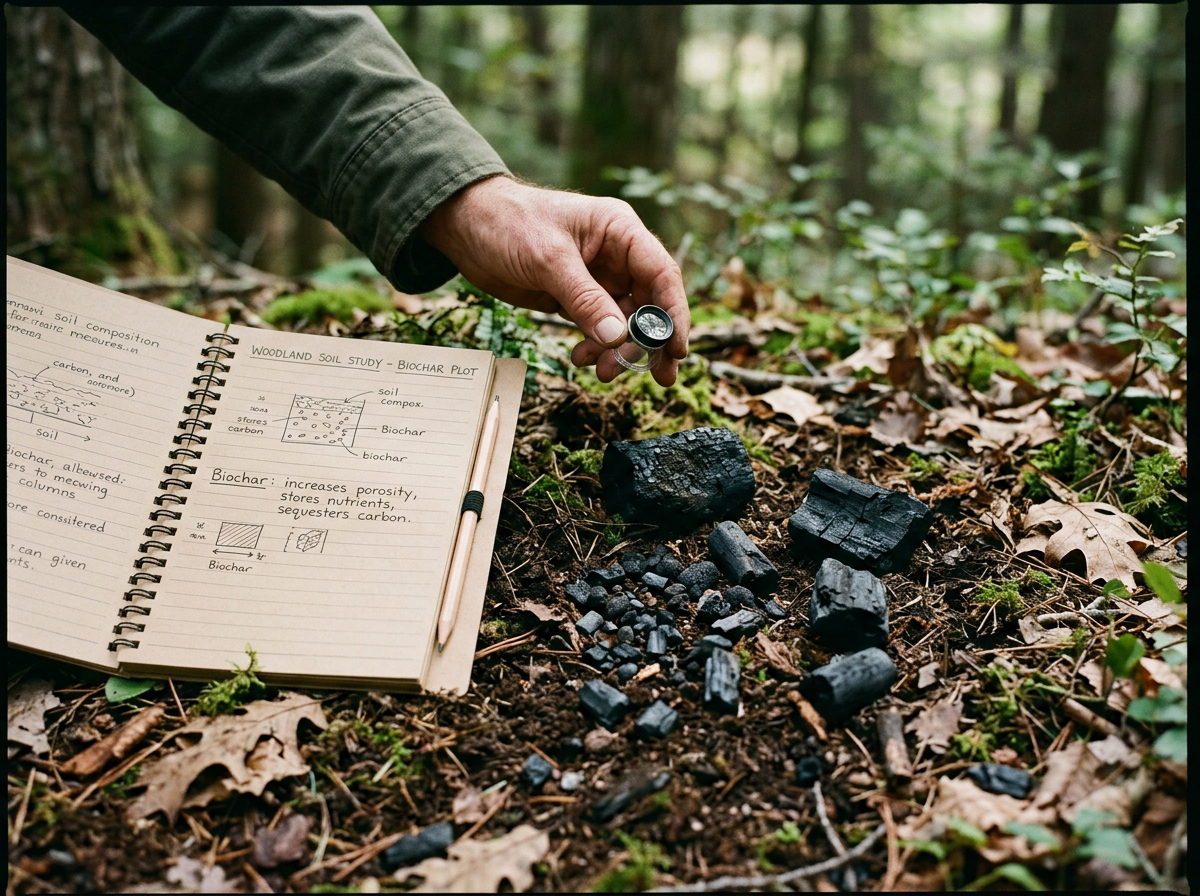
At Sweethill Biochar, we believe biochar has the greatest value when people understand what it is, why it matters and how to use it well.
-
Education has always been an important part of what we do. We want to make the science and practice of biochar accessible — sharing knowledge openly with gardeners, growers, land managers, businesses, schools and communities, and helping people make informed choices rather than relying on environmental claims or hype.
Our commitment goes beyond selling biochar. Through practical guidance, demonstrations, workshops and conversations, we want to encourage a deeper understanding of soil health, carbon, woodland management and the connections between them.
We are also committed to continuing to learn ourselves: drawing on research, practical experience and the knowledge of others, and sharing what we discover along the way.
Our mission is simple: to make biochar knowledge as accessible as biochar itself — so that more people can use it confidently, responsibly and effectively to build healthier soils and a more resilient future.
What Are We Doing ?
David Friese-Greene: Biochar, Communication and Practical Action
David Friese-Greene's involvement with biochar has always been about far more than producing charcoal for soil. At the heart of his work is a belief in education through practical action: helping people understand what biochar can do, showing them how it can be produced from locally available materials, and exploring ways in which it can benefit soils, communities and the wider environment.
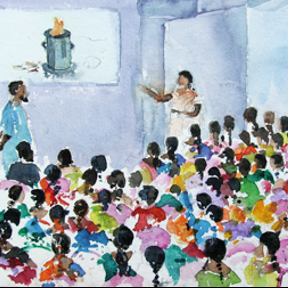
This philosophy led David to establish the Soil Fertility Project, through which he worked with researchers, organisations and communities to explore the potential of biochar as a practical response to declining soil fertility, waste biomass and climate change. He has given talks, demonstrations and practical workshops, with a particular interest in making the science and production of biochar accessible beyond academic and specialist circles.
Read More
-
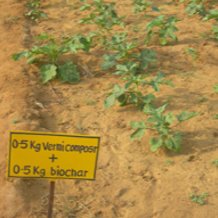
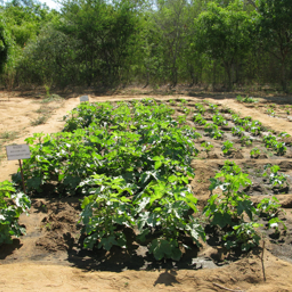
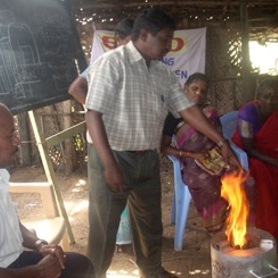
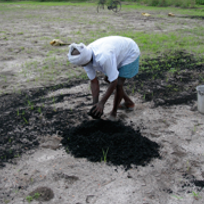
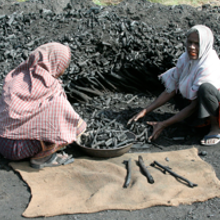
One of the most significant chapters of this work took David to Tamil Nadu in southern India, where he initiated a biochar research project with the rural development organisation SCAD (Social Change and Development). The project explored how locally available agricultural and organic wastes could be transformed into biochar and returned to the land, creating a resource from materials that might otherwise have been discarded or burned.
Importantly, the work wasn't simply about demonstrating that biochar could improve soil. David was interested in whether biochar systems could make practical, economic and social sense for the communities using them.
A particularly inspiring part of this work involved the Anila biomass gasifier stove, developed by Professor U. N. Ravikumar. The stove could use biomass to provide heat for everyday cooking while simultaneously converting some of that material into charcoal suitable for use as biochar. The Anila design works by pyrolysing biomass around a central combustion chamber, with the gases produced contributing to the cooking flame while char remains behind.
The potential was especially important for women. Traditional cooking over smoky biomass fires can expose women and families to harmful indoor air pollution. Cleaner-burning stove technologies offered a way of reducing that exposure while still using readily available local fuels.
But the Anila stove offered something more: cooking itself could produce a useful resource.
Instead of biomass simply disappearing as smoke and ash, the charcoal left behind could potentially be used as biochar on the family's own land, helping to improve depleted soils, or become a product that could be sold to generate additional income. David's early project calculations explored the possibility of substantial char production if the technology were adopted across the women's self-help groups involved with SCAD.
It was a beautifully circular idea: local residues provided fuel; the fuel cooked food; cooking produced biochar; and the biochar could help build soil or create economic value.
Just as importantly, the experience reinforced something that has remained central to David's approach ever since: a technology cannot simply be imposed because it looks good on paper. It has to work for the people using it. Education, demonstration, listening and adaptation are therefore every bit as important as the technology itself.
-
David's interest in biochar as a tool for addressing several problems at once also took his work to Namibia, where the landscape presents a very different challenge.
Large areas of Namibian savanna have been affected by bush encroachment, where dense woody vegetation reduces available grazing and alters the functioning of the wider ecosystem. Today, biochar initiatives in Namibia continue to explore converting this problematic bush biomass into a useful resource—creating biochar that can contribute to healthier soils, carbon storage and rural economic opportunities while supporting restoration of savanna landscapes.
For David, Namibia provided another example of the principle that had driven his work in India: what appears to be a problem can sometimes become part of the solution.
Unwanted woody biomass can become biochar. Biochar can become a resource for soil. And, when production happens locally, that resource can potentially create livelihoods and economic opportunities as well.
-
Running through all of David's work is a deep commitment to education and knowledge-sharing.
Whether working with rural communities overseas, collaborating with researchers, demonstrating biochar production or simply explaining what happens inside a kiln, his interest has always been in taking biochar out of the realm of theory and showing what it can actually do in the real world.
David also co-authored The Biochar Debate, published in 2009, which explored biochar's potential for carbon storage, restoring degraded land and improving agricultural soils at a time when the subject was still relatively unfamiliar outside specialist circles.
That same philosophy continues at Sweethill Biochar today. What began with questions about soil fertility and rural livelihoods thousands of miles away has ultimately come home to Devon, where David's decades of experience inform the biochar we produce, the way we manage our woodland and our commitment to helping more people understand the possibilities contained in this deceptively simple material.
For David, biochar has never really been about charcoal alone. It's about soil, climate, landscapes and people—and finding practical ways in which looking after one can help look after them all.
Jessica Eve: Education, Nature and Healthy (Eco)Systems
Jessica Eve's involvement in biochar grows naturally from several strands that have run throughout her working life: education, woodland and land-based work, and a holistic understanding of health and wellbeing.
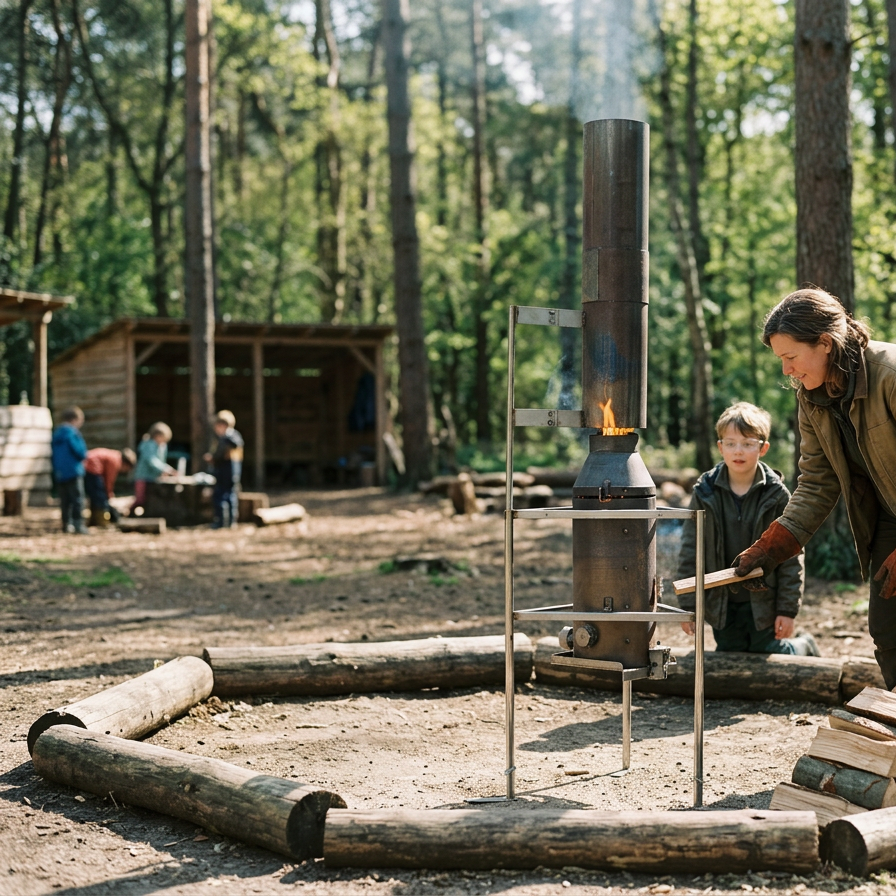
With a background as a teacher and forest school leader/woodland tutor, Jessica has spent many years helping people learn through direct experience of the natural world. Her work has strengthened a longstanding interest in the relationships between people, plants, soil and the wider ecosystem, and in how caring for the land can support both environmental and human wellbeing.
-
An important influence was her time working within a biodynamic woodland and farm system. Here, the woodland wasn't viewed in isolation, but as part of a living, interconnected whole: the woods, farmland, food production and people all supporting one another. The land also had an important social purpose, providing opportunities for community participation and meaningful, practical work, including for people experiencing mental health difficulties and those with additional needs.
This experience helped shape Jessica's understanding that healthy land, healthy communities and healthy individuals are deeply connected. Good land management isn't simply about what we can produce from the soil; it can create places where people learn, work, connect, find purpose and experience a greater sense of relationship with the natural world.
Alongside her educational and woodland work, Jessica's work in holistic health and body psychotherapy has developed this perspective further. At its heart is an understanding that human health doesn't exist in isolation. Our wellbeing is connected to our bodies, our relationships, the environments we inhabit, the food we eat and, ultimately, the natural systems that sustain us.
This is where biochar brings these different strands together.
Biochar begins with the land and returns to the land. It can transform woody material arising from responsible woodland management into a long-lasting resource for the soil — helping retain water and nutrients, supporting soil life and storing carbon in a stable form. Healthier soils, in turn, support healthier and more resilient plants, productive gardens and food-growing systems.
Jessica's work creating Sweethill Biochar is therefore about much more than selling a soil product. She has a particular interest in education and in helping people understand the bigger picture around biochar: how woodland management, carbon, soil biology, food growing, biodiversity and ultimately human wellbeing are interconnected.
This perspective also informs the wider vision for the woodland at Sweethill, where biochar production sits alongside the restoration of ancient woodland and a desire to care for the land in a way that is both environmentally and socially meaningful.
For Jessica, there is a simple thread connecting much of her work: healthy soil supports healthy plants; healthy landscapes support healthy communities; and our own wellbeing is inseparable from the wellbeing of the natural world around us.