
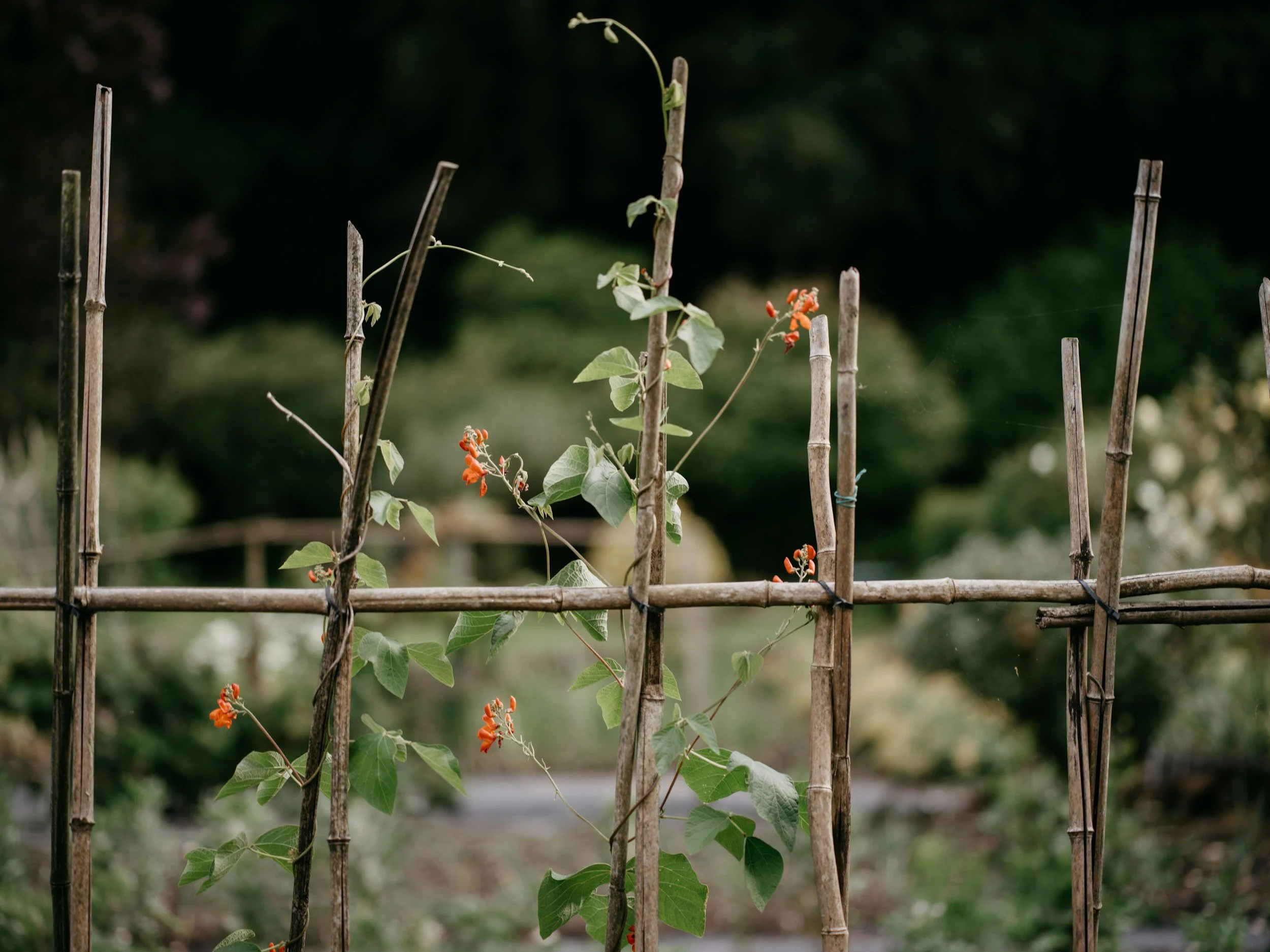
Biochar on Allotments & Veg Patches
Build Healthier Soil for Productive, Resilient Allotments
Whether you've just taken on your first allotment or have been cultivating the same vegetable beds for years, biochar offers something a little different from most of the things we add to our soil.
Rather than simply feeding this season's vegetables, biochar is about investing in the soil itself.
Its highly porous, carbon-rich structure can help retain water and nutrients, improve the physical properties of soil and provide habitat for beneficial soil microorganisms. And because biochar is remarkably resistant to decomposition, a single application can remain in the soil for many years.
That makes allotments and vegetable gardens an ideal place to use it.
And you certainly don't need to treat your whole plot at once. One of the easiest and most economical ways to use biochar is simply to add a handful whenever you plant.
Over time, your crop rotation does the rest.
Why Use Biochar on Your Allotment?
Help Your Soil Hold Onto Water
Vegetables can be thirsty things.
Courgettes, pumpkins, tomatoes, beans and other productive summer crops can require considerable amounts of water, particularly during prolonged dry weather.
Biochar's porous structure can help improve the water-retaining characteristics of soil, particularly in lighter soils.
It doesn't mean you'll never need to water again. Instead, think of biochar as one part of creating a more resilient soil that can make better use of the water it receives.
Help Keep Nutrients in the Soil
Every time we harvest vegetables, we're taking nutrients away from our plots.
That's why compost, manure and other feeds are such an important part of productive vegetable growing.
Biochar doesn't replace them.
Instead, its structure can help retain nutrients within the soil and create a long-lasting physical environment in which roots and soil organisms can thrive.
That's why we particularly like using:
Biochar + compost.
Compost brings organic matter and nutrients.
Biochar brings a highly stable, porous carbon structure.
They do different jobs — and can work beautifully together.
Support Living Soil
A productive vegetable patch isn't simply dirt with plants growing in it.
It's an ecosystem.
Bacteria, fungi, worms and countless other organisms are continually breaking down organic material and cycling nutrients through the soil.
The pores and surfaces within biochar can provide habitat for beneficial soil microorganisms.
For us, this is one of the most exciting reasons to use biochar.
You're not simply growing vegetables. You're growing soil.
First Things First: Never Apply Your Biochar Dry
This is important.
Always wet and charge your Sweethill Biochar before putting it into your soil.
Don't take dry biochar straight from the bag and sprinkle it around your plants.
Biochar is extraordinarily porous. We want those pores to enter your soil already carrying moisture, nutrients and biological life rather than being completely empty.
Before application, thoroughly wet and charge your biochar, with water or - ideally - with something nutrient-rich.
You can use:
homemade compost or compost extract
well-rotted manure
worm castings or wormery liquid
compost tea
suitable liquid plant feeds
another nutrient-rich organic mixture.
For a simple approach, pre-soak your biochar with water and your chosen charging material for at least two hours before application.
You can also mix biochar into moist compost and allow it to charge there before use.
Whichever method you choose, remember the basic rule:
Dry biochar stays in the bag. Charged biochar goes in the soil.
The Handful Method: The Easiest Way to Use Biochar
You don't need to calculate how much biochar would be required to treat your entire allotment.
Instead, simply make biochar part of your normal planting routine.
Every time you plant something, add a handful.
Over the course of a growing season, you may plant hundreds of individual vegetables.
Over several seasons, your crop rotation means those planting positions move around the allotment.
Without undertaking one enormous application, you're gradually building biochar into more and more of your soil.
Planting Out Vegetable Seedlings
When planting tomatoes, courgettes, squash, pumpkins, brassicas, beans, sweetcorn and other young plants:
1. Dig your planting hole as usual.
2. Add approximately a handful of charged, moist biochar.
3. Mix it with compost and/or the soil from the planting hole.
4. Place the plant into the hole, allowing the biochar-enriched mixture to surround the rootball.
5. Backfill and water well.
Don't create a concentrated layer of pure biochar underneath the plant. The idea is to distribute it through the soil and compost surrounding the developing roots.
One plant. One handful. Better soil left behind.
Planting Fruit & Perennial Vegetables
The handful approach isn't only for annual vegetables.
Whenever you're planting something new on the allotment, it's an opportunity to add biochar.
Try it when planting:
Strawberries • Raspberries • Currants • Gooseberries • Rhubarb • Asparagus • Artichokes • Fruit trees • Herbs
For larger plants, shrubs and trees, you can use several handfuls rather than one.
Mix the charged biochar thoroughly into the compost and excavated soil used to backfill around the rootball.
Again, don't put a concentrated layer of biochar at the bottom of the hole.
You're creating a biochar-enriched rooting environment around the plant.
And because perennial plants may remain in that position for many years, planting time is an ideal opportunity to introduce biochar into soil that you may not disturb again.
Planting Potatoes
Planting potatoes gives you another easy opportunity.
When preparing your potato trenches or individual planting holes, distribute charged biochar mixed with compost or soil along the planting area before covering your seed potatoes.
You don't need a large amount.
The principle remains the same: rather than treating the whole allotment, you're putting biochar into the part of the soil where this year's crop will actually be growing.
Planting Onions, Garlic & Sets
When planting individual onion sets, garlic cloves or similar crops, you don't need a whole handful around every small plant.
Instead, mix charged biochar through compost or soil along the planting row before planting.
You're still using the handful approach, but spreading those handfuls across several planting positions.
Direct Sowing: Add Biochar as You Sow
You can use the same principle when sowing vegetables directly into the ground.
For larger, individually sown seeds such as:
Beans • Peas • Sweetcorn • Courgettes • Squash • Pumpkins
mix a small amount of charged biochar with the soil or compost around the sowing position, sow the seed at its normal depth and cover as usual.
For rows of smaller seeds — such as carrots, beetroot, radishes and salads — distribute charged biochar lightly through the compost or soil surrounding the seed drill.
Don't try to germinate seeds in pure biochar.
The seed still needs good contact with fine soil or compost and consistent moisture.
Think:
Biochar around the future roots — not instead of soil around the seed.
And, as always, never sow into dry biochar.
Established Vegetable Beds
If you want to treat a larger area, mix your pre-charged biochar with compost before spreading it over your vegetable beds.
If you normally cultivate your soil, lightly incorporate the mixture into the upper growing layer.
You don't need to bury biochar deeply.
Over time, roots, worms, microorganisms and your normal cultivation will continue integrating it into the soil.
Then, when you're planting into that bed later in the season, you can still use the handful method around individual plants.
No-Dig Allotments
Biochar fits very naturally into a no-dig system.
Mix charged biochar through the compost you would normally add to the surface of your beds and spread the mixture as usual.
There's no need to dig the biochar into the underlying soil.
And when you come to plant through that compost layer, use the handful method again:
Make your planting hole → add charged biochar → mix it with the surrounding compost → plant your seedling.
Roots, worms, fungi and other soil organisms can gradually move and integrate biochar through the soil profile.
Let biology do the digging.
New Beds & Raised Beds
Creating a new bed is an ideal opportunity to introduce biochar more widely.
Mix charged biochar thoroughly through compost and your other growing materials rather than creating a separate layer.
We generally suggest biochar makes up around 5–20% of the material being added, depending on the intended use.
You can then continue using smaller handfuls in future years whenever new plants are established.
Biochar isn't intended to fill your raised bed.
It's a long-term soil amendment working alongside soil, compost and organic matter.
Add Biochar to Your Compost Heap
Perhaps the easiest method of all is to let your compost heap charge the biochar for you.
Add modest quantities of biochar through the heap as you build it, making sure it becomes thoroughly moist and is distributed amongst your green and brown composting materials.
The biochar then spends months surrounded by moisture, nutrients, decomposing organic matter and microorganisms.
When the compost is ready, you've got biochar-enriched compost ready to spread around your allotment.
And because the biochar has already been incorporated into moist compost, there's no question of applying it dry.
Think Handfuls, Not Tonnes
For an allotment holder, this is perhaps the most useful way to think about biochar.
You don't need to transform your entire plot overnight.
This spring:
A handful around your tomatoes.
A handful with your courgettes.
Some along your potato rows.
Some mixed through the compost around your beans.
Later:
Some when you plant strawberries.
Several handfuls when you establish a fruit bush.
Some through the compost you're adding to your no-dig beds.
Some into your compost heap.
Next year, your crop rotation moves and you do it again somewhere else.
Gradually, you're building biochar into more and more of your allotment.
How Often Should I Apply Biochar?
Unlike compost, biochar doesn't necessarily need to be reapplied every year.
Its stable carbon structure is highly resistant to decomposition and can persist in soil for decades and potentially much longer.
So don't think:
"How much biochar do I need every year?"
Think:
"How can I gradually build biochar into my allotment soil?"
Once you've treated a particular area sufficiently, move on to another part of the plot.
Continue adding your normal compost and organic matter each year, while the biochar you've already introduced remains behind.
Biochar + Compost: Better Together
If there's one thing we'd like allotment growers to take away from this guide, it's this:
Don't think biochar instead of compost.
Think:
Biochar + Compost
Your annual compost applications provide fresh organic matter and nutrients.
Biochar provides a persistent, porous carbon structure that can remain within your soil for years to come.
Together, you're investing in this year's harvest and the soil that will produce future harvests.
Why Choose Sweethill Biochar?
Not all biochar is identical.
Biochar can be made from many different feedstocks and under different production conditions, which can affect the characteristics of the finished material.
With Sweethill Biochar, we think knowing where your biochar comes from matters.
Our biochar is produced here in Devon using timber arising from the management of our own woodland.
Much of our woodland is ancient woodland that was historically planted with commercial conifers. We're gradually removing those plantation trees as part of our long-term work to restore a more diverse native woodland ecosystem.
Some of that timber is transformed into the biochar that eventually reaches your allotment.
That gives our biochar something increasingly important:
Traceability.
We know where the trees grew.
We know why they were felled.
We make the biochar ourselves.
And we know what we're working to restore in their place.
For allotment holders who care about what goes into the soil producing their food, we think that's important.
And because we're a small family business, buying our biochar directly supports the work we're doing here — producing biochar, caring for our woodland and gradually restoring its native ecology.
So next time you're planting something on your allotment, take a handful of charged Sweethill Biochar with you.
Mix it into the earth around the roots and let it become part of the soil.
From our woods, through our kilns, into your hands — and back into living soil.
Your allotment gets the biochar. Our woodland gets your support.